
How to Choose a Lawyer for Your Specific Situation
Learn how to choose a lawyer with confidence. Find, compare, and vet legal professionals using practical questions, pricing tips, and red flags to avoid.

You're facing a legal problem that won't wait. Perhaps your employer has changed the terms of your work status, a business contract is sitting unsigned, or a deadline is approaching and you need advice before making an expensive mistake. A friend gives you the name of a prestigious firm, so you call immediately. The firm sounds impressive, but the lawyer who takes your matter has never handled your particular situation, won't explain the fee structure clearly, and takes days to answer basic questions.
That's how people hire the wrong lawyer. They choose under pressure, mistake reputation for relevance, and discover the mismatch only after paying for it. Learning how to choose a lawyer means replacing the referral lottery with a practical comparison of experience, responsiveness, pricing, scope, and timing.
Table of Contents
- Why Choosing the Wrong Lawyer Costs More Than You Think
- Figuring Out What Kind of Legal Help You Actually Need
- Building a Shortlist the Smart Way
- Evaluating Experience That Actually Matches Your Case
- Comparing Pricing Availability and Engagement Models
- Red Flags That Should End Your Search Early
- Your Intake Questions and Booking the Right Lawyer on HeyAtty
Why Choosing the Wrong Lawyer Costs More Than You Think
A founder facing an urgent immigration problem chooses a recognizable firm after a friend's recommendation. The firm's reputation sounds reassuring, so the founder accepts a premium engagement without testing who will handle the matter. Weeks later, the assigned attorney proves experienced with routine filings but unfamiliar with the specific work-status issue threatening the business.
The bill is only the first consequence. An ill-matched lawyer may spend paid time learning basic facts, overlook the actual deadline, or recommend a broader engagement than the matter requires. The client pays for delays, repeated explanations, and sometimes a second lawyer to repair the first decision.
A prestigious name cannot compensate for weak case fit, unclear pricing, or poor responsiveness.
Practical rule: Choose the lawyer whose recent work most closely matches your problem, who answers clearly, and whose availability fits your deadline. Prestige matters less than relevance and reliable communication.
Compare at least two or three candidates before hiring. Focus on matter-specific experience, fee structure, communication clarity, and likely timeline, then ask each lawyer what they would handle personally and what the engagement excludes. The Federal Trade Commission's guidance on hiring a lawyer supports comparing candidates rather than relying on reputation alone.
Use this hiring sequence:
- Define the need: Describe the event and your desired outcome in ordinary language.
- Build a shortlist: Contact several plausible lawyers, not only the first referral.
- Test relevant experience: Ask about matters resembling yours and what the lawyer did.
- Clarify the engagement: Confirm whether you need a consultation, document review, limited-scope help, or full representation.
- Test the working relationship: Note response times, directness, fee explanations, and who will remain your contact.
You are not trying to predict the case result from a profile. You are checking whether the lawyer's experience, working habits, price structure, and availability match the matter before you commit.
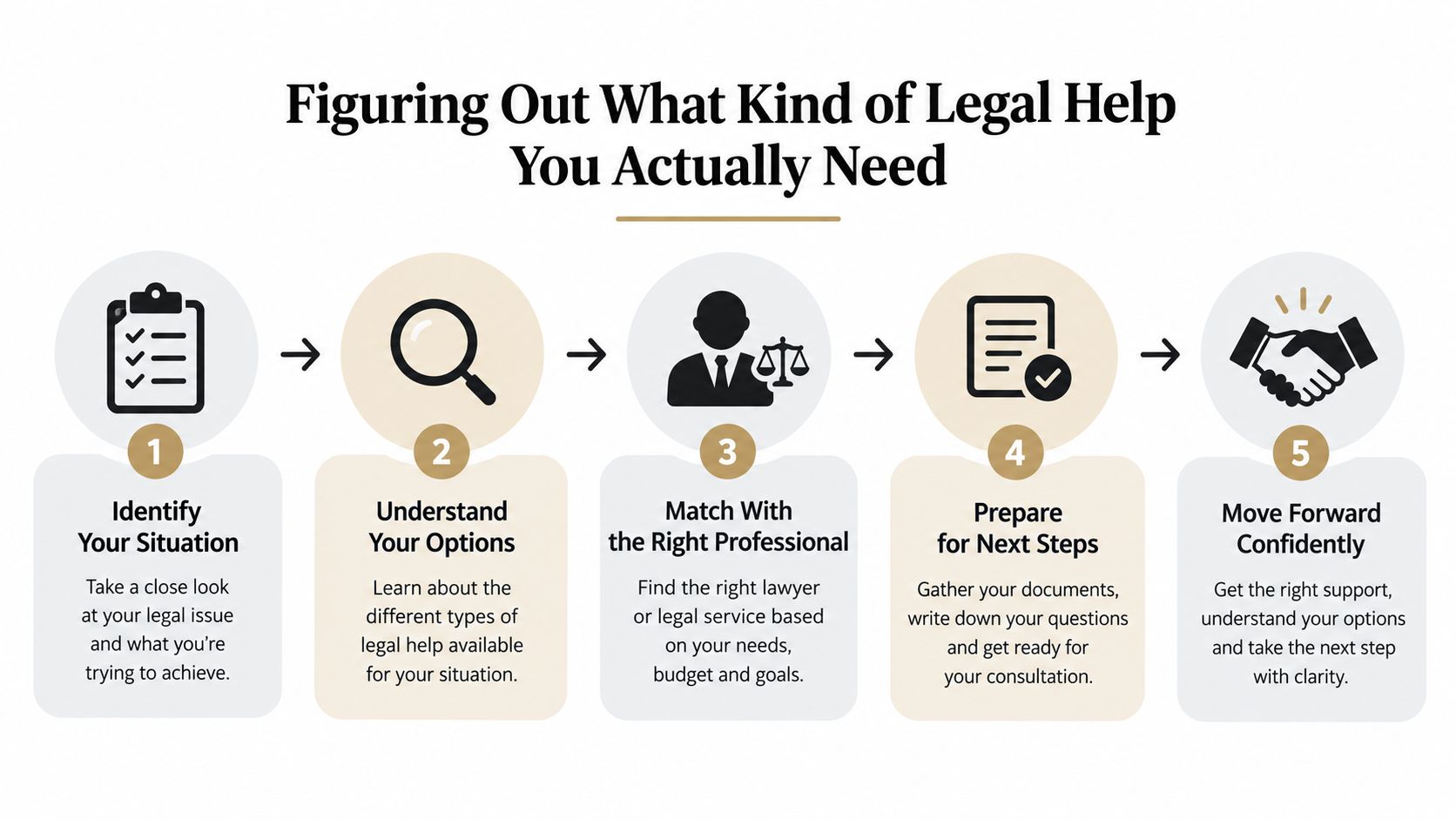
Figuring Out What Kind of Legal Help You Actually Need
People rarely start with a practice area. They start with an event. “My employer is changing my work status” may point toward immigration, employment, or both. “I'm signing my first client contract” may call for business counsel, contract review, or a focused consultation rather than ongoing representation.
Start by writing three short sentences:
- What happened? State the event without legal labels.
- What could happen next? Identify the decision, deadline, dispute, or risk.
- What do you want from a lawyer? Choose advice, document review, negotiation, filing, or full representation.
This exercise prevents a common error: searching for a broad category that attracts lawyers who aren't equipped for the actual matter. A founder dealing with an immigration issue after a job change should look for experience tied to that transition, not a profile that merely says “immigration.” A small business owner preparing a services agreement should look for contract and business experience relevant to the transaction, not a general lawyer with no commercial focus.
HeyAtty's guide to identifying what kind of lawyer you need uses a guided intake approach so users can describe their situation without already knowing the correct legal terminology. Its currently open intake areas include Immigration and Business. Family, Employment, Real Estate, Criminal, Personal Injury, and Estate Planning are marked as coming soon.
Choose the engagement before choosing the lawyer
The same legal problem can require very different levels of help.
- Full representation makes sense when the matter is complex, adversarial, deadline-driven, or likely to involve negotiations or proceedings.
- A one-off consultation may be enough when you need a legal assessment, a second opinion, or a clear answer before deciding what to do.
- Limited-scope advice can work when you'll handle part of the process yourself but need help with a contract, filing, strategy, or document.
This choice affects your budget and your shortlist. A lawyer who is ideal for full representation may be unnecessarily expensive for a narrow review. Conversely, a quick consultation won't replace ongoing advocacy when another party is already represented or the consequences of a mistake are substantial.
Name the problem first. Then decide what assistance you want. Only after that should you compare lawyers.
Building a Shortlist the Smart Way
A referral starts your search. It does not finish it. The recommendation reflects the other person's matter, priorities, and experience. That lawyer may be excellent and still be a poor fit for your case, location, budget, or deadline.
Create a shortlist of two or three credible candidates. Start with referrals, bar directories, specialist searches, or structured legal marketplaces. The source matters less than the quality of the comparison that follows.
Use four filters before you contact anyone
Compare candidates using four practical variables:
| Decision variable | What to verify |
|---|---|
| Matter-specific experience | Has the lawyer handled your type of legal problem, rather than only working in the same broad practice area? |
| Fee structure | Is the billing method clear, and does it fit the work you need? |
| Communication clarity | Does the profile and first response answer your questions directly? |
| Likely timeline | Can the lawyer explain the next steps and the factors that may affect timing? |
Apply these filters before booking consultations. A profile filled with broad credentials but no detail about your problem deserves less attention than a less prominent lawyer who explains relevant work clearly.
Research the profile, not just the name
Look for a professional profile that sets out the lawyer's services, background, credentials, availability, and engagement terms. Read reviews for concrete detail. “Great lawyer” tells you little. A review describing the matter, the lawyer's communication, and how the work was managed provides more useful evidence.
A structured directory such as HeyAtty can help you filter by practice area, review verified profiles, check availability and pricing, and read community Q&A before making contact. You still need to judge the fit yourself. The directory puts comparable information in one place instead of requiring research across disconnected websites.
Contact candidates with the same summary
Give every candidate the same concise description. Include the event, relevant documents, location, urgency, desired outcome, and the type of help you believe you need. Consistent information makes replies easier to compare and shows which lawyers read the facts carefully.
Pay attention to the first response. The right candidate identifies the problem, explains the next step, states what they can and cannot handle, and gives you a realistic basis for deciding. A quick reply is useful, but speed without substance is not responsiveness.
Do not hire the first name you hear. Hire the lawyer whose experience, communication, pricing, and timeline fit the matter in front of you.
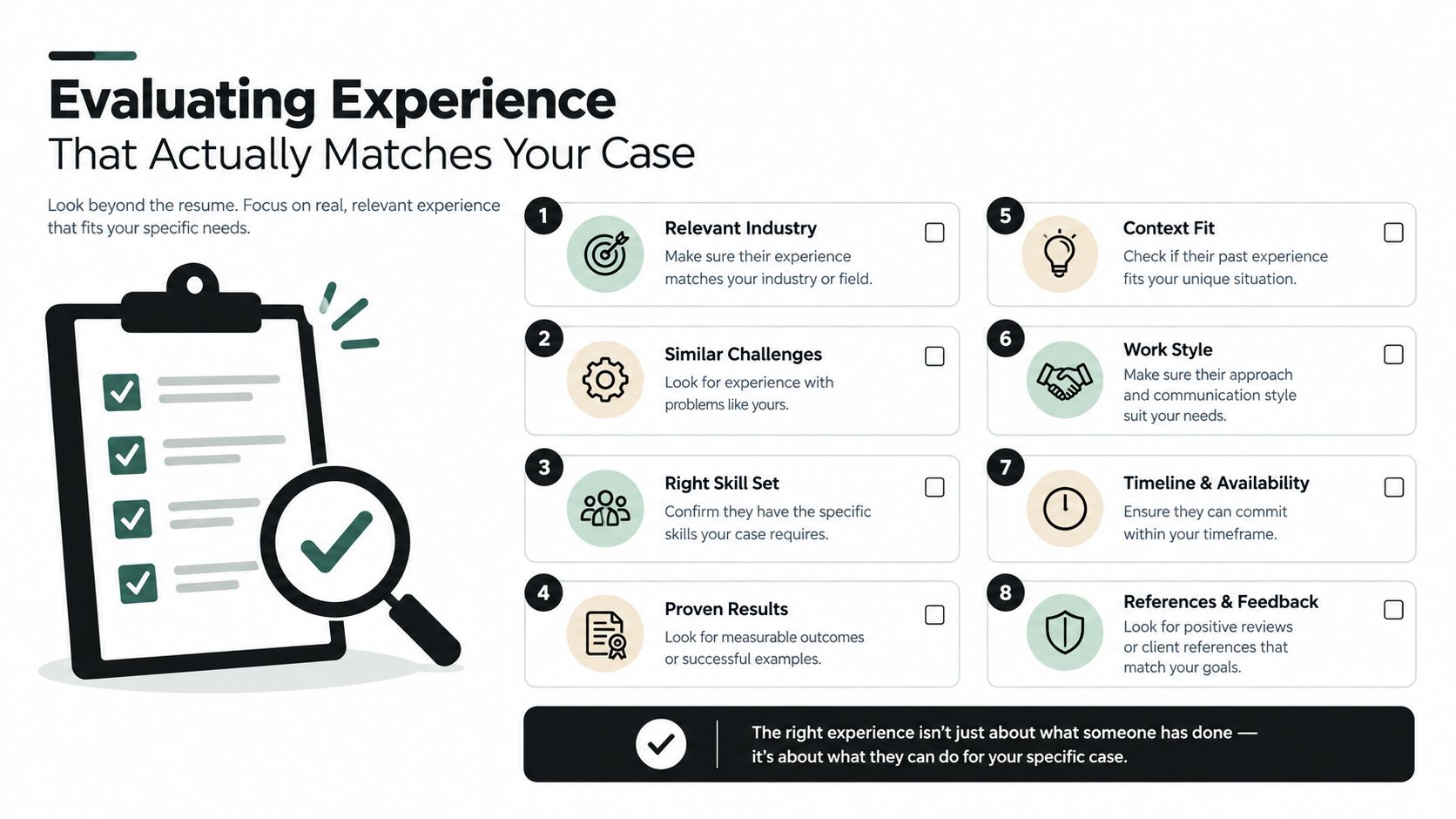
Evaluating Experience That Actually Matches Your Case
“Ten years of experience” is a weak hiring signal by itself. “Handled H-1B transfer cases after layoffs” tells you far more because it connects the lawyer's experience to a specific fact pattern, pressure point, and procedural challenge.
The same distinction applies everywhere. A lawyer may handle immigration matters but rarely represent founders seeking a particular employment-based route. A business lawyer may draft contracts but have little experience with the industry, transaction type, or dispute risk involved in yours. A family lawyer may handle custody work but not the cross-border or high-conflict circumstances your matter presents.
Ask for a comparable matter
The most revealing question is simple:
“Have you handled a matter like mine, and what did your work involve?”
You're not asking the lawyer to disclose confidential information. You're asking for a general description of the type of problem, the strategy used, and the issues that affected the process. A useful answer should identify relevant facts, likely decision points, and the kind of work the lawyer personally performed.
Compare these two answers:
- “I've handled many immigration cases.”
- “I've advised employees and founders dealing with work-status changes after employment ended, including document preparation and communication with the relevant parties.”
The second answer gives you something you can evaluate. It shows whether the lawyer recognizes the specific pressure in your matter.
Inspect the evidence behind the profile
A strong profile should make several things easy to confirm:
- Relevant matters: Look for examples tied to your situation, not only a list of practice areas.
- Services offered: Confirm whether the lawyer provides advice, drafting, negotiation, filing, or representation.
- Credentials: Check that licensing and professional details are verifiable for the jurisdiction involved.
- Reviews with detail: Prefer feedback that discusses communication, process, and work performed over generic praise.
- Availability: A highly relevant lawyer who can't engage within your required timeframe may not be a practical match.
Consumer research supports putting expertise first. A FindLaw discussion of legal consumer preferences reports that expertise ranked ahead of specialization, cost, and reputation in the survey it describes. The same source reports that 75% valued a local lawyer within about 26 miles, while 54% first contacted a lawyer by mobile phone, reinforcing the practical importance of proximity and responsiveness alongside substantive fit.
Treat responsiveness as part of experience
A lawyer's early communication doesn't prove the result of a case, but it does reveal how the relationship may work. If the lawyer answers the central question, identifies missing facts, and tells you what information to prepare, you've learned something valuable about their working method.
For a fast-moving matter, a nearby or available lawyer who understands your case may serve you better than a prestigious specialist who can't engage promptly. Specific experience gets the lawyer onto your shortlist. Clear, timely communication helps decide whether they stay there.
Comparing Pricing Availability and Engagement Models
Price is often the first thing consumers compare, yet many people don't learn the actual cost until they speak with a provider. UK consumer tracker data reports that 56% compare price when shopping for legal services, while 60% find out about price only through a discussion with the provider. The same Legal Services Consumer Panel report reports that 77% find legal costs easy to understand, suggesting that the problem is often access to pricing information rather than an inability to understand it.
Don't compare hourly rates in isolation. Compare the work included, the lawyer's level of involvement, the risks left with you, and what could cause the scope to expand.
Match the model to the matter
| Engagement Model | Cost Predictability | Your Involvement | Best For |
|---|---|---|---|
| Full representation | Lower predictability when the matter evolves | The lawyer manages strategy, communications, documents, and proceedings within the agreement | Complex disputes, negotiations, filings, and matters where mistakes carry serious consequences |
| One-off consultation | High predictability for a defined meeting or advice session | You carry out the next steps after receiving guidance | Early assessment, second opinions, document questions, and deciding whether further help is needed |
| Fixed-fee or limited-scope help | Higher predictability for clearly defined work | You handle tasks outside the agreed scope | Routine documents, contract reviews, specific filings, or small business matters with a defined deliverable |
A small business owner may not need a lawyer to manage every aspect of a straightforward contract. A focused review can identify unfavorable terms and leave the owner to handle the business conversation. A dispute involving multiple parties, threatened proceedings, or unclear liability calls for a different level of involvement.
Ask what happens when the scope changes
Before booking, ask:
- What exactly is included in the fee?
- What work is excluded?
- Who performs the work?
- How are additional tasks approved and billed?
- What happens if the matter becomes contested?
- Will the lawyer notify you before costs exceed the initial expectation?
A consultation price is useful only when you understand what the consultation delivers. The HeyAtty guide to legal consultation fees can help you prepare for that discussion, but the lawyer still needs to define the scope of the particular engagement.
Availability belongs in the same comparison. A lawyer with a suitable price but no realistic opening may not fit your deadline. Conversely, a lawyer who can meet promptly but offers no relevant experience is not a solution. Choose the combination of relevance, access, clarity, and cost predictability that your matter requires.
Red Flags That Should End Your Search Early
The most important red flags are behavioral. A polished website and a personal recommendation can't compensate for a lawyer who ignores messages, avoids direct questions, or pressures you to sign before explaining the agreement.
For urgent immigration, business, employment, or family matters, responsiveness is an early test of fit. The 2025 legal consumer report cited by Scorpion's report on legal client behavior found that 74% of consumers research firms online even after receiving a personal recommendation, 57% say online reviews outweigh word of mouth, and 72% will move on if they don't hear back within 24 hours. More than half said they wouldn't hire a firm without online chat.
Those figures don't mean every lawyer must offer instant access. They do show why reputation alone isn't enough. Consumers increasingly test the firm's digital presence and early communication before committing.
Walk away when you see these patterns:
- No meaningful reply: Silence or a generic response leaves you unable to assess urgency and fit.
- Vague next steps: The lawyer talks about experience but won't explain what happens after the consultation.
- Fee avoidance: You receive pressure to sign without a clear explanation of billing, scope, or possible extras.
- Immediate pressure: A lawyer who insists you commit before answering reasonable questions is prioritizing the intake over informed consent.
- Unclear communication channel: You don't know who will respond, how updates will arrive, or whether the assigned lawyer will handle the matter.
The right comparison isn't “Who is the best lawyer?” It's “Who is the best lawyer for my case and timeline?” A lawyer can be highly capable in the abstract and still be the wrong hire for your deadline or communication needs.
Your Intake Questions and Booking the Right Lawyer on HeyAtty
Your first call should function as an interview, not a performance where you hope the lawyer approves you. Bring a concise factual summary and ask questions that connect the lawyer's experience, proposed scope, timing, and fees to your situation. For a printable checklist, see HeyAtty's questions to ask before hiring a lawyer.
Use these questions.
Experience and strategy
Have you handled a matter like mine, and what did your work involve?
A strong answer identifies comparable facts and explains the lawyer's role without disclosing confidential information. Specific case experience matters more than a broad practice-area label.
What facts could change your initial assessment?
A careful lawyer names missing documents, deadlines, opposing positions, or other uncertainties instead of treating the answer as obvious.
What options are available from here?
You want a clear comparison of possible next steps, not a promise of a particular result.
Scope and fees
What would you handle, and what would remain my responsibility?
The answer should define deliverables in plain language, including what the engagement does not cover.
How do you charge for this work, and what could create additional fees?
A useful response explains the billing method, included tasks, exclusions, and approval process for extra work. Price transparency at the first call prevents disputes later.
Would a consultation, fixed-fee task, or full representation make more sense for this matter?
The lawyer should explain the recommendation and match the engagement to your needs, rather than defaulting to the broadest arrangement.
Timing and communication
What needs attention first?
The lawyer should identify the immediate action and the information required from you.
What timeline is realistic, and what could delay it?
A responsible answer separates known steps from factors outside the lawyer's control.
Who will work on my matter, and how will I receive updates?
Confirm whether the person you meet will remain involved, who else may handle the work, and which communication channel the firm will use.
The booking process should preserve that clarity. With HeyAtty, you describe the situation through a guided intake instead of choosing a practice area from scratch. You then review three to five strong matches, see why each profile fits your description, inspect relevant experience, confirm the consultation price and availability, and book securely with consent-based information sharing.
That sequence puts matching before commitment. You can compare specific case experience, scope, responsiveness, timing, and price instead of choosing from an unfiltered list or accepting a single referral.
Before the call, prepare a short chronology, the names of the people or organizations involved, relevant documents, your location, known deadlines, and the outcome you want. Do not send sensitive information to multiple lawyers indiscriminately. Share enough to establish fit, then use the lawyer's secure intake process for confidential details.
The right lawyer has handled your kind of case, explains the next steps clearly, and makes booking easy.
Use that sentence as your hiring test. If a candidate fails one of those requirements before the engagement begins, do not assume the relationship will improve later.
HeyAtty helps you describe a legal situation, compare vetted professionals by relevant experience, pricing, and availability, and book a consultation through a consent-based process. Visit HeyAtty to turn an uncertain legal problem into a focused shortlist and a more informed first call.